The draft and the gate
Unstructured chat or a call in. A structured request out.
The model reads the thread. Software validates it. You still approve. That is how a field business is allowed to trust the inbox.
The extraction
“Our AC isn’t working. 24 King Street. Tomorrow afternoon?”
That sentence is the product. AI turns it into fields a dispatcher can stand behind, with a score on each one, not a black box.
If afternoon is only 82% sure, you see it. If the service is not in your catalog, software rejects the guess. The conversation stays visible either way.
Draft
“Our AC isn’t working. 24 King Street. Tomorrow afternoon?”
- Service
- 96%
- Site
- 94%
- When
- 82%
- Problem
- 97%
AC Repair
24 King Street
Tomorrow afternoon
AC not working
The stack
The model extracts. Software validates. You act.
Classify the message
Is this a job request, a catalog question, or someone asking for a person? Software routes the turn before a job is even considered.
Extract structured intent
Service, customer, address, window, problem, priority: each with confidence and a note on what is missing.
Validate against your catalog
Deterministic rules check the draft: is that service in your catalog? Empty retrieval is better than a made-up fact.
A person still decides
The raw thread stays next to the draft. Approve, edit, or leave it as a conversation. The model does not invent a job.
What the AI does
- Draft a request from WhatsApp, SMS, email, or voice
- Score confidence and flag missing fields
- Answer catalog and hours questions from your knowledge
- Suggest a clarification instead of guessing
- Hand the thread to a person when it cannot answer
- Stamp outbound replies so the customer sees “AI assistant”
What it will not do
- Create a job without a human
- Assign a crew member or invent a time slot
- Invent services, prices, or loyalty points
- Read another company’s conversations
- Promise an arrival time it cannot keep
- Mute the dispatcher. Needs you stays a first-class queue
Needs you
A handoff is a feature, not a failure.
When the latest message cannot be answered from your FAQs, hours, or catalog, software hands the thread to a human and tells the customer, with no invented times.
Asking for a person hands off. “What services do you offer?” stays on AI. Missing address on a job request is not a handoff. The assistant keeps asking.
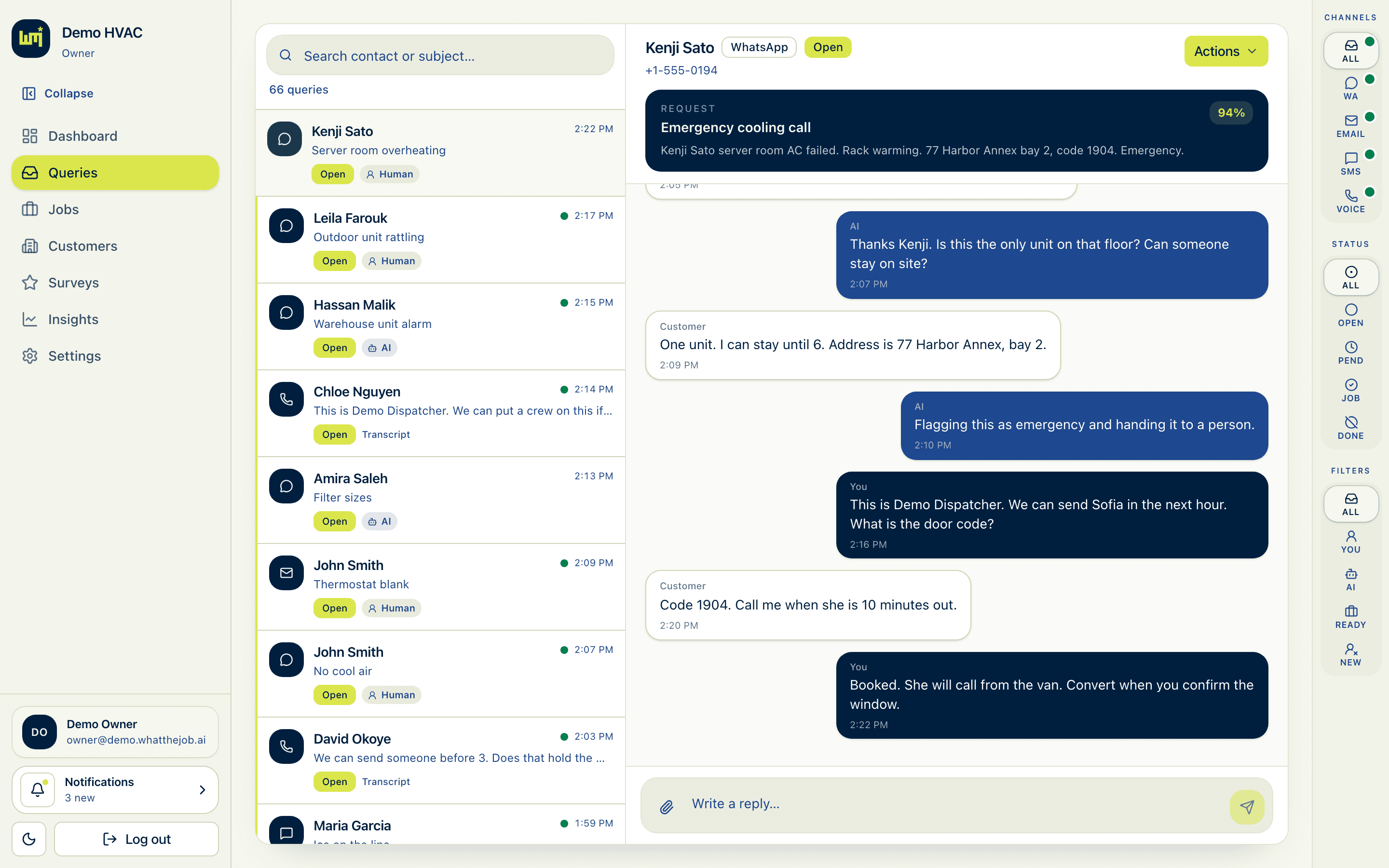
Queries · AI handling, then convert
Insights · ask about these numbers
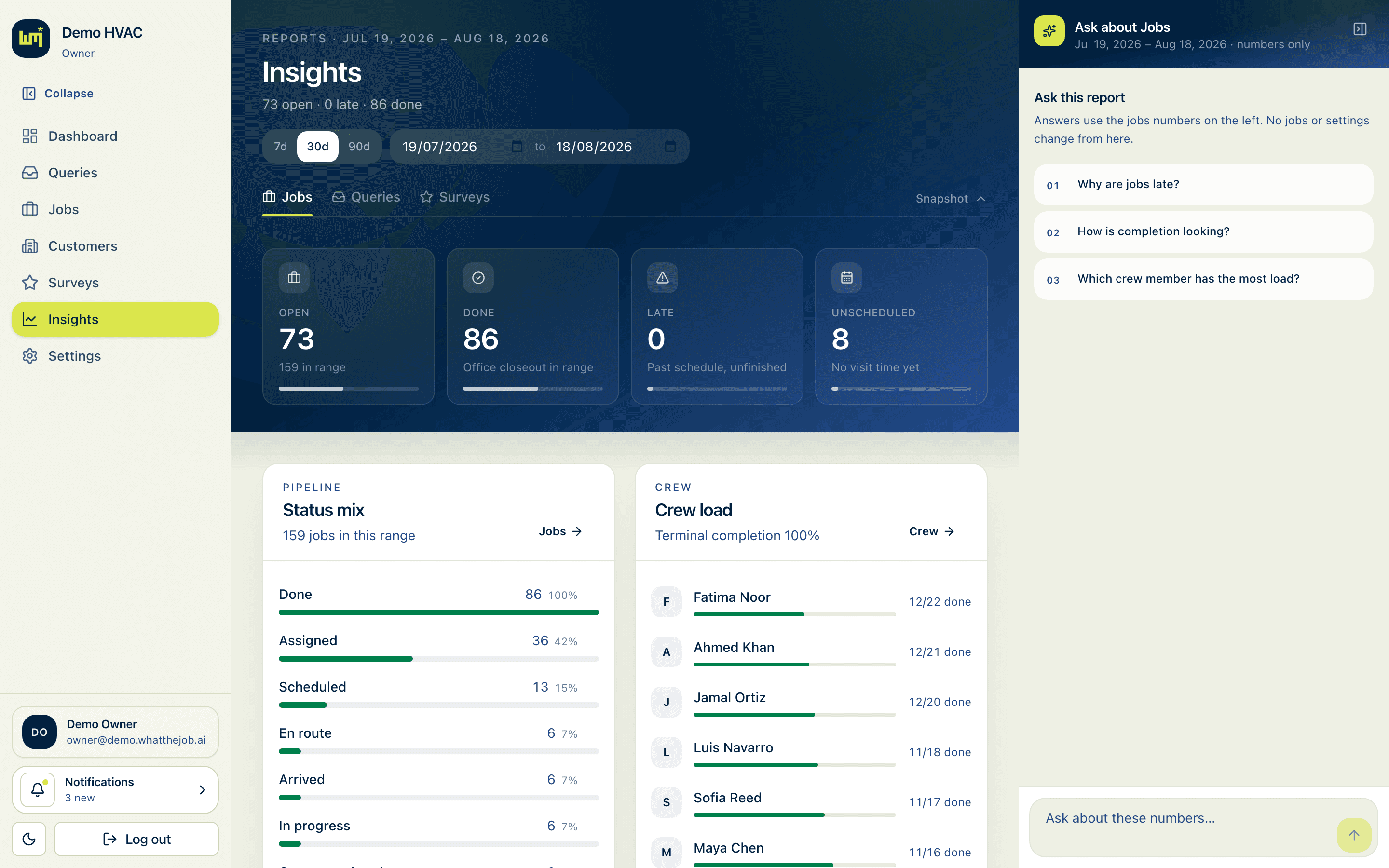
Insights
Ask about the week, from numbers, not vibes.
Owners and admins can ask about mix, load, and completion. Answers come from deterministic aggregates. The chat does not mutate jobs, invent late counts, or dispatch anyone.
See the AI on your own inbox.
We walk a real message or call through extraction, the human gate, and the job, not a slide about generic field software.